Will They Ever Begin Searching Again for Mh Flt 370
Somewhere in the vast expanse of Earth's oceans lies MH370, the Malaysia Airlines flying that disappeared on 8 March 2014 with 239 people on lath.
Authorities closed the books on the search in 2017, but all over the earth people are continuing the hunt. And one day the plane volition exist constitute.
So says the Australian who was in charge of the apprentice search, because people won't give up looking for it.
Peter Foley was the programme director for the international endeavour led past the Australian Transport Safety Bureau. Hundreds of people helped search more than 120,000 square kilometres of the southern Indian Ocean seafloor. They mapped the area, tried to trace droppings dorsum to its origin, and prepared for a recovery mission, earlier the search was suspended at the start of 2017.
In its closing report, the ATSB explained its scientific processes and professed very homo emotions while talking directly to the families of the disappeared.
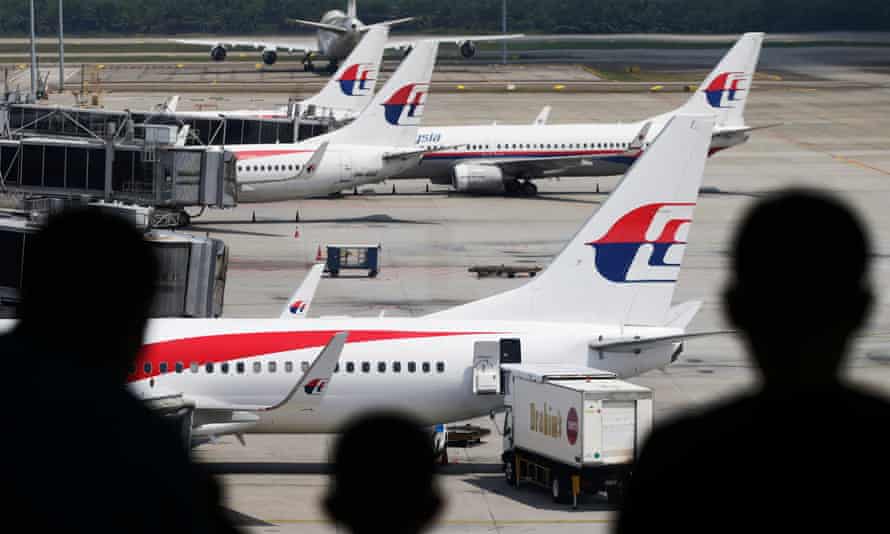
"We share your profound and prolonged grief, and deeply regret that nosotros have not been able to locate the shipping, nor those 239 souls on board that remain missing," the report says.
"It is nigh inconceivable and certainly societally unacceptable in the mod aviation era … for a big commercial aircraft to be missing and for the world not to know with certainty what became of the aircraft and those on board."
Foley focuses on that empathy and regret, and says MH370 volition be found, and it will be establish near the surface area they were looking in.
"It'due south 1 of those things that will enthral people until the mystery is solved," he says. "It is a mystery that must be solved and will exist solved eventually."
MH370 disappeared from air traffic control radar 38 minutes into its flight from Kuala Lumpur, Malaysia, to Beijing, Cathay. Analysis of satellite and radar data showed it had kept flying for another seven hours.

Conspiracy theories well-nigh what happened abound. On social media people speculate about the involvement of organ harvesters and black holes, aliens and North Korea. Other theories, including that it was a murder/suicide plot by the pilot, or that the pilot was unconscious, have been taken more than seriously – although never confirmed.
In January 2018 the Malaysian authorities contracted marine robotics company Ocean Infinity to ship in autonomous underwater vehicles in a "no-find, no-fee" deal. Past May they had given up – for now.
At that place are still defended searchers, ranging from conspiracy theorists to well-intentioned amateurs and total-blown experts.
They include those who piece of work with new data models and are driven to solve the MH370 mystery for celebrity, or money, or knowledge, or to give the loved ones left behind some answers.
Dr Ian MacLeod, an expert in shipwrecks, a diver of the deep, and a lover of ocean mysteries, too says it's a thing of when, not if, it volition be found.
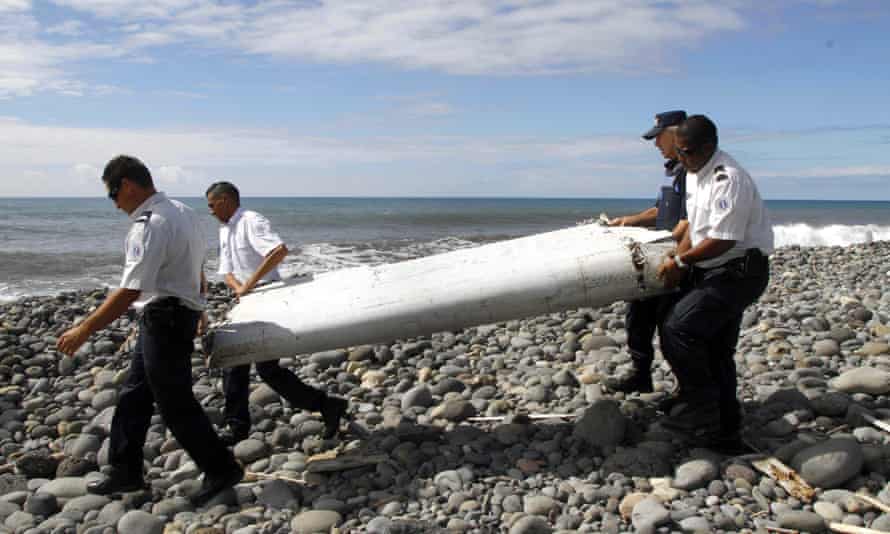
A world-famous authority on maritime corrosion and conservation and a WA Museum fellow, Macleod says MH370 mystery hunters are people who enjoy "unscrambling the bullshit" around what happened to that aeroplane.
"What happens is there are people who exercise not take lies, and sniff them out at a yard paces and who are passionate and persistent and clever," he says. "You need those three combinations, just like yous need three points of reference to triangulate a falling meteorite.
"People will not requite up until the last breath has gone out of their trunk. People will observe it. New data will come to light, governments volition modify, and they'll get back and observe it."
The Malaysian government said in 2018 that information technology wasn't ruling out future missions, and the family members of those lost are urging them on. Bounding main Infinity has said it is open to a new search.
I of those leading the pack of MH370 detectives is aerospace engineer Richard Godfrey, part of the independent group of scientists hunting for the wreckage.
Speaking from Frankfurt in Germany, Godfrey says he's "quite focused", spending hours every twenty-four hours for the past 7-and-a-half years on the search. He uses the weak signal propagation written report (WSPR) network to track disturbances in radio waves. A global database of radio waves that are reflected or scattered when an shipping crosses them.
Imagine trip wires forming a mesh beyond a prairie, he says.
"Each stride you make you tread on particular trip wires and we can locate you lot … we can track your path equally you motility through the prairie."
Those disturbances, mapped together with satellites pinging the plane, can help "fill in some of the gaps and aid u.s.a. to know more precisely where MH370 crashed". He says his findings suggest the MH370 pilot laid false trails to confuse authorities before plunging into the southern Indian Ocean. That in turn suggests the pilot knew what he was doing.

Godfrey says his interest in the fate of MH370 stemmed from something that happened to him. In 2009 he was booked on a flight from Rio de Janeiro to Paris. A calendar week after that same flight, Air French republic 447, crashed into the Atlantic with 228 people on board. Later on about two years of searching, the main wreckage was plant.
When MH370 went missing, Godfrey wanted answers. So do the adjacent-of-kin, he says, and the aviation manufacture, not to mention anyone who gets on a aeroplane expecting to land safely at the other end.
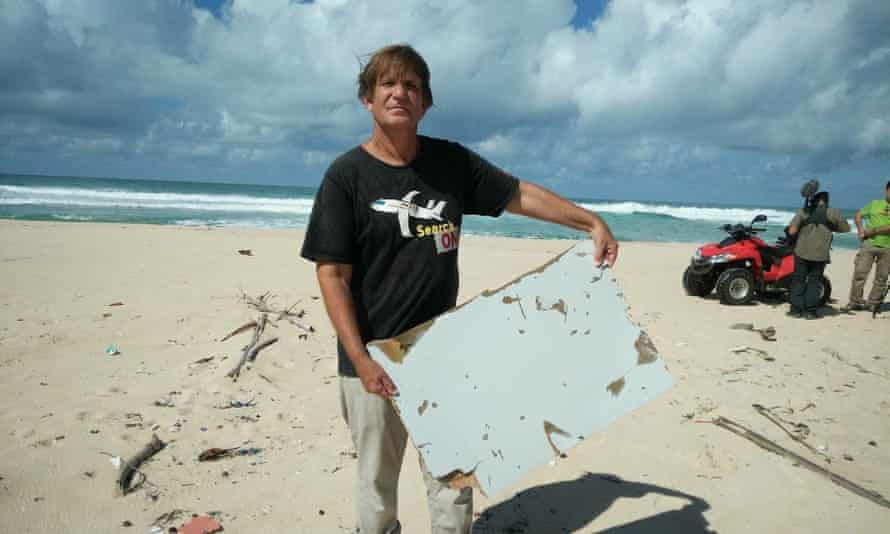
There are many others who share his passion. Wreck hunter Blaine Gibson is all the same searching for answers. Bob Ballard, who found the Titanic wreck in 1985, wants to aid. The families have e'er said they would keep fighting.
MacLeod, the Perth-based corrosion expert, talks virtually what remains and how knowing what'due south downwards there could help those left behind.
Depending on the damage done on touch, if the plane settled on a hard surface – say, rock at the bottom of a watery abyss – information technology could be well preserved. But if it has sunk into silt, the aluminium will have corroded. Much will depend on where it is, and deep bounding main currents that can take loftier or depression salinity, loftier or depression temperatures.
Merely information technology could look "remarkably unchanged", MacLeod says, with the windows popped out by the force per unit area, merely the tube intact. And it should be left under h2o, because bringing into the air could encounter information technology crumble.
The important thing is giving the families closure. MacLeod talks nigh the emotion of finding the HMAS Sydney, when survivors and relatives went out and laid wreaths over the site.
And he was on the HMAS Anzac for the 100th ceremony of the sinking of AE2 – Australia's 2d submarine – where joint Australian/Turkish bands played in the memory of those who went down. (Australia's showtime submarine, the AE1, was found in 2017 off the coast of Papua New Guinea).
MacLeod thinks a lot virtually ocean mysteries and the importance of the rituals of grief.
As a boy in Ballarat, he rang the memorial bells to marker Harold Holt'southward death on a summer's mean solar day in 1967when the then prime minister went missing in the heavy surf near Portsea in Victoria. He was never seen over again. MacLeod rang the bells, and went on to a career based on lives lost at bounding main.
"In that location are sure rites of passage that y'all participate in," he says. "I owe my whole professional career in corrosion and conservation to the decease and misfortune of people who got shipwrecked on the WA declension.
"People who lost their lives, that was not in vain, because their story lives on … that's what motivates me. Information technology's why I requite public talks about disuse and preservation … fifty-fifty subsequently we're dead, our stories only brainstorm to be retold in some other fashion, through the processes of decay.
"Every bit of decay has a story to tell."
Foley is retired now, but is patently even so emotionally continued to the MH370 story, and he has a clear-eyed overview of everything that's happened since the ATSB search concluded.
He says he is "extraordinarily peachy" to see another search started, for the aeroplane to exist constitute. He is besides extraordinarily keen to straight questions about his role back to the work other people did, and the reason they did it – the families.
"I honest believe the people who were and so far from home in really appalling weather in the Indian Ocean are the absolute heroes of the search and we really worked incredibly hard to notice that shipping," he says.
"And it would be such a relief for anybody involved to meet it was finally found and that in that location were answers for 239 families.
"Whether information technology's pure dumb luck and a fisherman picks up a piece of debris on a long line or whether information technology'south an advance in engineering that allows u.s. to search in smashing item large areas of the ocean floor or whether it'southward a philanthropist who uses existing technology … it will be found."
Source: https://www.theguardian.com/world/2021/oct/03/it-will-be-found-search-for-mh370-continues-with-experts-and-amateurs-still-sleuthing
0 Response to "Will They Ever Begin Searching Again for Mh Flt 370"
Post a Comment