Social Learning and Citizenship Through Language Arts Instruction Adult Learner
Integrating language arts and social studies can lead to powerful gains for kids. Why?
In that location are a few cardinal reasons. First, kids ofttimes love the content covered in social studies—think volcanoes, Egypt, dogs—which tin motivate them to brand progress in ELA. Second, the literacy skills that overlap with social studies are too the ones we apply most in adult life. Only in your own Cyberspace time today, y'all probably accept had to read informational text, deport research, and analyze current events.
Finally, intentionally integrating language arts and social studies can help to ensure that the latter doesn't go lost with the emphasis on reading and math happening in virtually schools.
So how can you lot integrate ELA and social studies? Here are a few smart strategies.
1. Build an awesome library of informational texts.
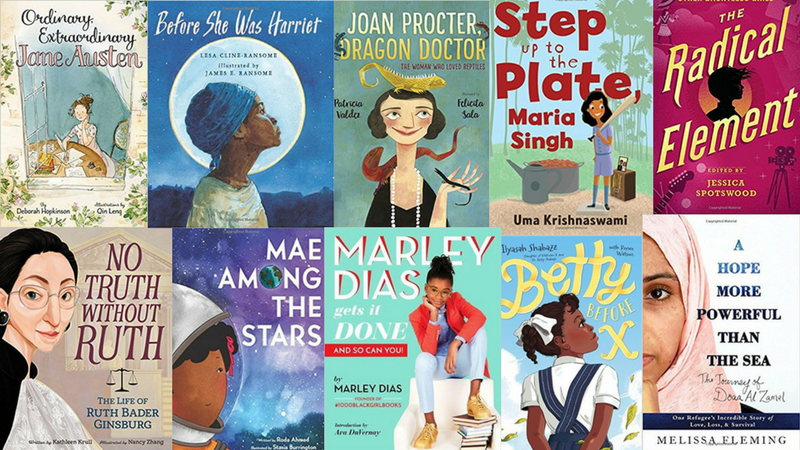
This might sound like the well-nigh obvious proffer, but it's an of import ane. Research shows that despite the Common Core's push for nonfiction, kids are still reading far more fiction than informational text throughout their schooling. The amount of quality nonfiction has increased, however. Yous can find great texts for almost any social studies topic yous might cover, from space to biographies to women'southward history.
two. Have a classroom news anchor.
If you have classroom jobs, this is a nice add-on to the lineup. The part of the news anchor is to share one to three events happening in the news during your forenoon coming together or another transition time. Students can then discuss what's happening or answer in writing.
three. Become across report writing.
Often when we ask kids to write in social studies, the focus is on advisory writing or reports. This kind of writing has its place, only there is also room for creative, reflection, and opinion writing tied to social studies content. Nosotros beloved these visual social studies writing prompts.
4. Keep things fresh with classroom magazines.
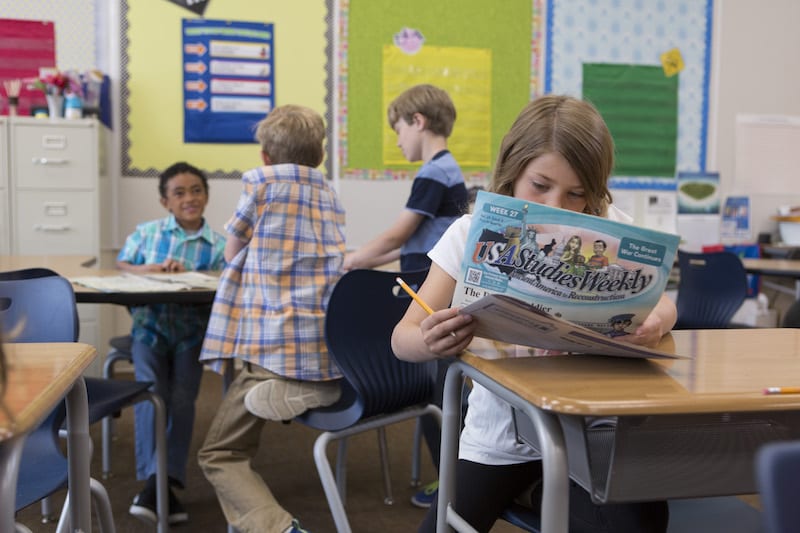
I of the challenges of traditional social studies textbooks is that they tin can often experience dried by midyear. That's where a great nonfiction library can come in, but nosotros also like classroom magazines for incorporating fresh social studies content too. Studies Weekly is a favorite of ours considering everything is aligned to the social studies and linguistic communication arts standards for your state.
5. Put students' interview skills to test.
Conducting interviews or oral histories of relatives or community members is a groovy way to practise speaking, listening, and writing skills. This kind of projection also hands ties into numerous social studies units. We love this Slideshare for more information on doing oral history projects.
six. Build vocabulary.
The globe of social studies comes with its own rich and detailed vocabulary, and students lose ground when they don't have the context or background knowledge for new words. Creating word walls for your social studies units can be a not bad way to build some of that context and support.
vii. Analyze master sources.
Kids of all ages can strengthen their close reading and analysis skills by examining primary sources. Photographs can exist a particularly useful way to build writing and reflection skills. The Library of Congress offers a number of lesson plans on photographic analysis, including this 1 on the Ceremonious State of war.
8. Consider historical role play.
Role play tin can exist a corking way to synthesize a number of literacy skills, including research, writing, speaking, and listening. Here blogger Quaternary Course Flipper explains how she uses role play during her Revolutionary State of war unit.
ix. Employ a form timeline.
A timeline tin can be a good strategy to help students synthesize the information they have learned in various social studies units throughout the yr. It can as well help students put new historical data into context, in both social studies and language arts.
10. Assess historical thinking rather than facts.
When we emphasize facts in social studies (e.g., "When did the Civil War start?"), we may lose out on the deeper literacy skills required for more sophisticated historical understanding. The Stanford History Education Group offers close to 100 online historical assessments designed to mensurate understanding over facts.
Source: https://www.weareteachers.com/integrating-language-arts-and-social-studies/
0 Response to "Social Learning and Citizenship Through Language Arts Instruction Adult Learner"
Post a Comment